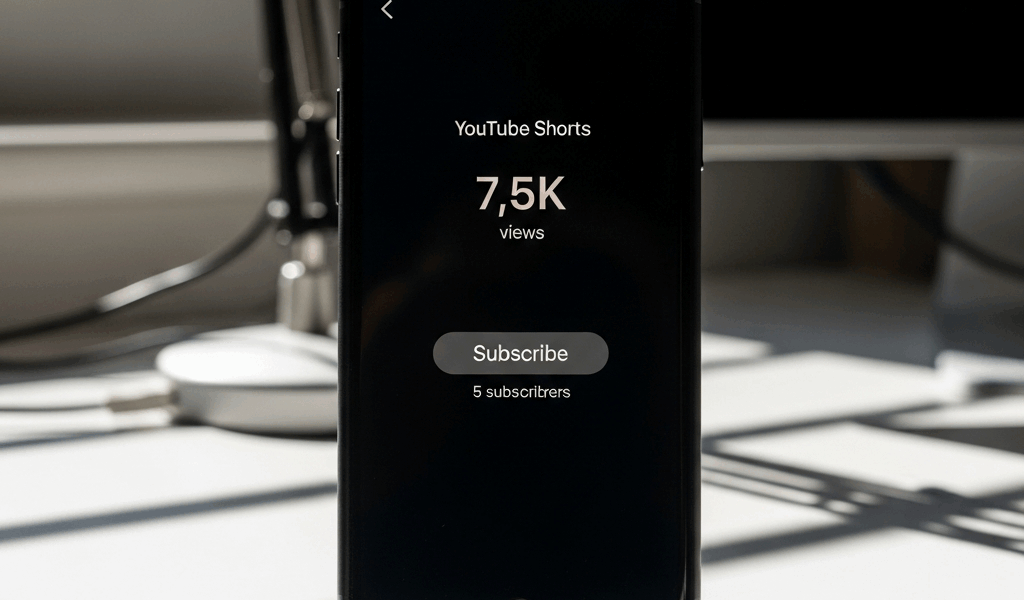
Why Views and Subscribers Are Disconnected on Shorts
YouTube Shorts has gotten complicated with all the conflicting advice flying around. Everyone’s celebrating their view counts while quietly wondering why their subscriber number refuses to budge. I’ve been there — staring at 200,000 views on a Short and seeing exactly 9 new subscribers. Nine. So I dug into the actual mechanics of why this happens, and today I’ll share everything I found.
But what is the Shorts feed, really? In essence, it’s a passive consumption environment. But it’s much more than that — it’s a fundamentally different psychological contract between viewer and creator. When someone opens the Shorts tab, they’re not hunting for a channel to follow. They’re swiping. Killing time. The algorithm feeds them content based on watch patterns, not intent. Your video could be genuinely great and still convert nobody, because the person watching arrived as a stranger with zero investment in who made it.
Compare that to search-driven views. Someone who types “DaVinci Resolve color grading tutorial” and clicks your video has already told YouTube something important: they have a specific problem and they want your category of knowledge. That’s a warm visitor. Shorts viewers are cold — sometimes freezing cold.
Understanding that gap changes everything. The views are real. The algorithm is doing its job. The structure of your content just isn’t built to turn casual scrollers into deliberate followers. That’s fixable. All three problems are fixable, actually.
Your Hook Is Grabbing the Wrong Audience
Probably should have opened with this section, honestly. The hook — those first 1 to 2 seconds — controls everything downstream about whether someone subscribes.
There’s a real difference between a hook that drives views and one that pre-qualifies subscribers. A view-bait hook triggers curiosity in basically anyone. It stops the scroll. But it casts a net so wide that 99% of the people it catches have no reason to care about your channel specifically. A subscriber-magnet hook does something harder — it stops the scroll and simultaneously filters the audience, telling the right people “yes, this is for you” before they’ve even finished watching.
Here’s a real example. I used to open Shorts with lines like “Wait until the end” or “You won’t believe this.” Those pulled in numbers — roughly 800,000 impressions across ten videos. Total new subscribers from those ten videos: 12. The hook was technically working. People watched. But the people watching were completely random — no shared identity, no particular reason to stick around.
I rewrote every hook to lead with a specific outcome instead of manufactured mystery.
View-Bait Hook (Wrong)
“This changed everything for me.”
That line could be about fitness, kitchen gadgets, cryptocurrency, relationships — anything. The person watching has no idea if they belong here. They watch. They scroll on. They forget you existed by the time the next video loads.
Subscriber-Magnet Hook (Right)
“If you’re still editing YouTube videos in Adobe Premiere, you’re wasting 20 hours a month.”
In the first three words, someone either thinks “that’s me” or “not me.” If they land on “that’s me” — they’re pre-qualified now. They have a problem. Your channel apparently solves it. They have an actual reason to see what else you’ve made. The hook didn’t just grab views. It grabbed the right views.
The second version pulled fewer raw impressions — around 450,000 instead of 800,000. But it generated 34 new subscribers. Those people watched the next three uploads. They responded to polls. That’s real channel growth versus a vanity metric that flatters you and does nothing.
Write hooks as problem statements, outcome promises, or identity signals. Start with “If you,” “People who,” “Anyone trying to,” or “When you.” You’re filtering the audience before the video even finishes playing. That’s the entire game.
You Have No Subscribe Trigger in the Video
Most creators assume viewers will subscribe if they genuinely enjoy the content. They won’t — not without a specific reason and explicit permission to act on it. Enjoyment alone doesn’t translate to action. People need to be asked.
Your call-to-action belongs in the final 2 to 3 seconds of the Short. Not upfront. Not buried somewhere in the middle. The end — right when retention is already dropping, so you’re not sacrificing watch time by adding it. Timing matters here because you’re catching someone whose attention is already beginning to drift.
Say it out loud. Don’t just slap a text overlay on screen. A verbal CTA paired with a text overlay is significantly harder to ignore than either one alone. I’m apparently a visual and auditory processor simultaneously, and this combination works for me while text-only overlays never really registered.
Here’s what kills most CTAs: they’re completely generic. “Subscribe for more content” tells the viewer absolutely nothing about what they’re actually signing up for. You need a formula — and it’s a simple one:
“Subscribe if you want [specific outcome].”
Examples that actually work:
- “Subscribe if you want to stop losing money on ad spend.”
- “Subscribe if you’re building a personal brand on LinkedIn.”
- “Subscribe if you want your next video to rank on Google.”
One sentence each. Finished thought. The viewer knows exactly what they’re subscribing to — and more importantly, whether they personally want that thing.
Your Channel Page Is Killing Conversions
As someone who spent four months obsessing over Short optimization while completely ignoring my channel page, I learned everything there is to know about this mistake the hard way. Today, I’ll share it so you don’t repeat it.
I pulled my analytics one afternoon and discovered that 15% of viewers who actually clicked through to my channel page were subscribing. Roughly 1 in 7. It should have been closer to 1 in 3. That gap was costing me hundreds of subscribers a month — people who were already curious enough to click. Don’t make my mistake.
The culprit was the channel page itself. Curious viewers clicked through, saw a generic blue gradient banner I’d never bothered updating, and left within seconds. The page communicated nothing. No premise. No sense of whether they belonged there.
When someone lands on your channel, they have about 5 seconds to understand what you make. Five seconds. If they can’t answer “what does this person actually create?” in that window, they’re gone — and they’re not coming back.
Three things need to be immediately obvious:
- Channel banner. State explicitly what your channel is about. Not your name. Not a vague motivational tagline. “YouTube Editing Tutorials for Creators” beats “Creative Ideas with John” every single time. A Canva Pro account runs $13 per month — the banner itself takes maybe 10 minutes to update once you’re in there.
- About section. Two sentences, maximum. First sentence: what you make. Second sentence: who should subscribe. Something like — “We teach YouTube creators how to edit faster in DaVinci Resolve. Subscribe if you’re tired of spending 30 hours on a single video.” That’s the whole section. Done.
- Feed clarity. Mixed Shorts and long-form is totally fine. But if your feed is a random stack of Shorts mixed with uploads from three years ago when you made completely different content, new visitors won’t understand what you’re actually about now. Your most recent uploads should represent what you’re making today — not who you were in 2021.
Quick audit method: open your channel in an incognito window. Pretend you’ve never seen it before. Ask yourself whether you can answer “what does this creator make?” and “is this channel for someone like me?” within 5 seconds. If the answer to either question is no, those three elements need work before anything else.
The Fix That Actually Moves the Number
So, without further ado, let’s dive into the actual priority order — because doing all three at once is overwhelming and doing them in the wrong sequence wastes time.
First: Rewrite your Shorts hooks. Drop the curiosity bait entirely. Replace it with identity signals and outcome statements. This single change moved my subscriber-per-view rate by roughly 40% to 60% within two weeks of consistent posting. It’s the highest-leverage edit you can make.
Second: Add the specific CTA in the last 2 to 3 seconds of every new Short going forward. Say it out loud. Use the “subscribe if you want [outcome]” formula. This typically adds another 20% lift on top of whatever the hook change already produced.
Third: Run the channel page audit. Update the banner — seriously, the blue gradient has to go. Rewrite the about section in two sentences. Clean up the feed if your recent uploads don’t reflect your current direction. This catches the curious viewers who do click through and converts them instead of losing them to a confusing page.
One honest thing worth saying: some Shorts will always pull views without producing subscribers. That’s structural — the algorithm will keep surfacing content to random people, and that’s fine. The goal isn’t converting every single viewer. The goal is fixing the situations where your ideal subscriber is actually watching your video, getting value from it, and then leaving anyway because nothing in the video or on the channel page gave them a reason to stay. These three fixes close that specific gap. Everything else is just noise.



Stay in the loop
Get the latest make video short updates delivered to your inbox.